






Quality Standards
Internationalization
Prestige and Global Accreditation
URCI
Work Team
“The Interinstitutional Cooperation Relations Unit (URCI) of the ESPE connects the University with the world. Through strategic alliances with national and international institutions, we promote cooperation opportunities that promote academic training, research and innovation.
We work to open doors to students, teachers and researchers, generating spaces for collaboration that strengthen the exchange of knowledge and contribute to the institutional and national development.”
Director of Interinstitutional Cooperation Relations
Camila José Flores Márquez - cjflores7@espe.edu.ec
Inter-Agency Cooperation Relations Analyst
Andrea Alejandra Andrade Ordoñez - aaandrade16@espe.edu.ec
Inter-Agency Cooperation Relations Assistant
José Guillermo Guerra Hinojosa - jgguerra3@espe.edu.ec
Executive Assistant 1
Ms. Denisse Stefany Tapia Merizalde - dstapia2@espe.edu.ec
Contacts
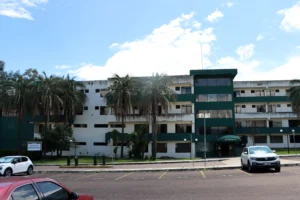
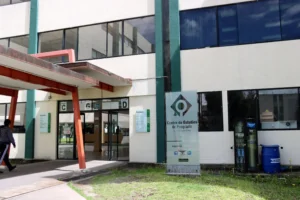
Location: Administrative Building (Second Floor)
Opening hours: 07:00 – 16:00
Phone: (593)23989-400 ext: 1070; 1073; 1074; 1075
Mail: cjflores7@espe.edu.ec, dstapia2@espe.edu.ec, urci@espe.edu.ec
Frequently Asked Questions
What type of agreements does the URCI manage?
The URCI manages framework and specific agreements with public and private entities, related to academic cooperation, research, pre-professional internships, continuing education, mobility and linkage.
Who can apply for the management of an agreement?
The academic and administrative units, research centers and authorities of the ESPE can request the management of an agreement, through the established institutional channels.
What is the process for signing an agreement?
The process includes the formal request, issuance of a convenience report by the future administrators, preparation of the agreement proposal based on the templates provided by the URCI; technical review or analysis of the instrument by the URCI, legal review and subsequent subscription by the competent authorities.
Does the URCI draw up the agreements?
No, the URCI provides the templates approved by legal advice, advises on the preparation, review and negotiation of cooperation instruments, ensuring their alignment with current institutional and legal regulations. The technical aspects of the instruments are agreed upon by the technical areas or administrators.
How long does it take to manage an agreement?
The time may vary depending on the complexity of the instrument, the availability of information and internal reviews; however, the URCI guarantees that within a period of no more than 30 days the instrument is ready for execution.
What is a framework agreement and a specific agreement?
The framework agreement establishes general guidelines for cooperation, while the specific agreements detail specific activities, responsibilities, schedules and, if applicable, financial aspects.
How can I obtain information about current agreements?
You can request information from the URCI or consult through the following spaces provided for you: XXXX
AGREEMENTS
How to Promote an Agreement
In order to sign a framework, specific or pre-professional internship agreement, it is necessary to have some documents to begin the respective procedure as indicated in the Regulations to Manage the Subscription, Execution, Monitoring, Settlement and Closure of Conventional Instruments of Interinstitutional Cooperation of the University of the Armed Forces – ESPE.
It is necessary that the Director of the Department or Career related to the scope of the agreement is the promoter of the Agreement (who prepares the Convenience Report). The Director of the Career or Department must submit a memorandum (Quipux) requesting the signing of the draft agreement to the director of this Unit with the following information and documentation:
- Copy of ID or passport of the legal representative of the company or institution.
- Copy of the appointment or enabling document that accredits the representation for the signing of the agreement.
- RUC of the company or institution (national agreements).
- Draft of the agreement.
- Signed convenience report (evidencing the reasons for its convenience to sign the agreement).
Models
National Agreements
List of agreements in alphabetical order
International Agreements
List of agreements by country
Internationalization
How to Apply?
Mobility
Networks



WAIT AROUND THE WORLD
Daniel Suarez, Chongqing, China/Cincinnati, USA
Daniel Suárez, a master's student at the University of Cincinnati, USA, and a Mechatronics graduate from the ESPE Armed Forces University, is working as a teaching assistant at Chongqing University thanks to a successful agreement between these two universities, which allows students like Daniel to travel and experience in other areas.He has shared with us some spectacular photos of the campus where he works as a teaching assistant, as well as others of the beautiful botanical garden of the university. Click to see them.
Alfonso Rivera and Cynthia Guamán, Toluca, Mexico
With AIESEC's social exchange program, students Alfonso Rivera and Cynthia Guamán, from the Commercial Engineering Career, 8th level, participated in the Coworking on Sustainable Development together with authorities from the city of Toluca, Mexico, as part of their project to validate pre-professional internships; worked for Sustainable Development Goal #17 Alliances to achieve the objectives in the organization Acción Universitaria.You can also internationalise your pre-professional internship hours and work towards the fulfilment of the Sustainable Development Goals with AIESEC.
Milton Fonseca, KUMOH Institute Of Technology (KIT) - South Korea
Milton Fonseca, a student of Mechatronics Engineering, is the winner of a scholarship from the Government of South Korea for an academic exchange.
Cynthia Gordón, Buenos Aires, Argentina
PhD candidate Cynthia Gordon shares her experience as a student abroad:Cynthia studied biotechnology at ESPE, and after working for a few years, she decided to pursue her master's degree in Spain, focused on environmental sustainability.For her, it is very important that in current times companies and public entities leave aside the linear processes of overexploitation of natural resources and begin to apply a new perspective: circular processes in which companies assume their responsibility to society in the economic and social sphere, so that all waste can be reused and that which cannot be reused. can be treated appropriately to prevent them from affecting the environment and people's health.In his words, we would all benefit, as companies could save on expenses and people would maintain their good health.Although Cynthia did not intend to continue researching, after her experience in Spain she decided to continue studying and through a scholarship she went to Buenos Aires to do her doctorate. There she had the opportunity to do internships in another country, which she is successfully doing in the ESPE laboratories, in charge of Dr. Luis Cumbal.We wish the best for Cynthia and hope that all her knowledge can be used so that Ecuador excels in the scientific field.