













POSGRADOS | ESPE

Menu

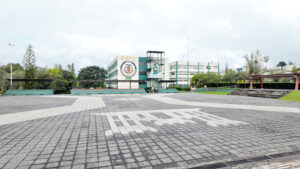
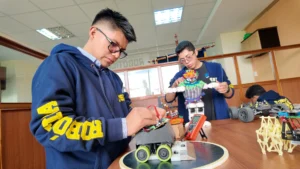
ESPEU participated in the university fair, held at the Manuela Cañizares School, a space that brought together more than 800 students interested in learning about higher education opportunities.

During the day, the ESPE team presented its academic offerings, training programs, research opportunities, mobility and professional development, providing direct information to those who are preparing to make one of the most important decisions of their future.

With these initiatives, we bring higher education closer to young people, motivating them to build their life project through knowledge, innovation and commitment to the country.

DEGREE

Information Technology Engineering

Select a campus

DEGREE

Information Technology Engineer

CES Resolution

RPC-SO-13-No.205-2016

DURATION

4 Years

MODALITY

On-site / Online

Academic Identity

Learn about the foundations of the program

To train outstanding academics, professionals, and researchers who are creative and humanistic, with leadership capacity, critical thinking, and a strong sense of civic responsibility; to generate, apply, and disseminate knowledge; and to provide and implement alternative solutions to the country’s problems, in alignment with the National Development Plan.

Leader in knowledge and technology management within the National Higher Education System, with international prestige and recognized as a benchmark for the practice of ethical, civic, and service-oriented values to society.

1.Relate knowledge of computing and mathematics to Information Technology by leveraging techniques, skills, and tools to apply best practices and standards in their management.

2.Identify, define, and manage IT solutions to problems and needs, considering the local and global impact of computing, in order to implement alternatives and practices that improve organizational services through effective information technology projects.

3. Design, select, implement, integrate, and manage computer-based systems, processes, components, or programs to meet user needs.

4. To promote teamwork, leadership, and intercultural communication without distinction based on gender or ethnicity, within the framework of professional ethics, for problem-solving in the field of information technology.

Program video

Experience studying Information Technologies

Discover daily life in our classrooms, laboratories, and academic spaces. Students, faculty, and researchers share their stories.

Learn about the foundations of the program

Profiles and outcomes

The professional we train and the competencies you will develop

The Information Technology (IT) Engineer addresses a national need as a competent professional who can contribute directly to the implementation of the country’s shift in its production model and provide cross-cutting support for the policies outlined in the National Development Plan.

  1. Design, implement, and manage communications networks while ensuring quality of service and information security.
  2. Implement information technology systems and solutions to meet the needs and policies of organizations.
  3. Develop and manage software applications in web, mobile, and cloud environments, taking information security into account.
  4. Design and manage efficient database systems
  5. Modeling computer systems in the field of artificial intelligence.
  6. Plan and manage the technology lifecycle of organizations, taking into account their constant evolution.
  7. Design and implement technological systems based on software engineering.
  8. Analyze and assess the security risks of information systems.

1. Possesses the necessary competencies to manage and control technological infrastructures.

2. Understand and assess information needs.

3. Develops mid-sized applications.

4. Assess and manage the risk factors associated with IT systems.

5. Manages quality control.

6. Uses techniques to audit the quality of IT systems.

7. Design, configure, and maintain database systems to ensure the integrity, availability, and confidentiality of stored information.

8.

Curriculum Structure

Academic structure of the program

Current Curriculum

Gallery Gallery

Spaces, moments, and experiences that bring the program to life

Admissions and costs

Spaces, moments, and experiences that bring the program to life

CES Resolution

RPC-SO-15-No 309-2020

Program Code

ISOF-SQ-2023

Accreditation

In process

Application Dates

March – April 2025 / August – September 2025

Program cost:

Article 356 of the Constitution of the Republic establishes, among other principles, that third-level public higher education shall be tuition-free, and that this gratuity is linked to the academic responsibility of students.

Begin your path in

Information Technology Engineering

Join Universidad de las Fuerzas Armadas ESPE and become part of an

academic community of excellence with international reach.

DEGREE

Information Technology Engineer

CES Resolution

RPC-SO-13-No.205-2016

DURATION

4 Years

MODALITY

On-site / Online

Academic Identity

Learn about the foundations of the program

To train outstanding academics, professionals, and researchers who are creative and humanistic, with leadership capacity, critical thinking, and a strong sense of civic responsibility; to generate, apply, and disseminate knowledge; and to provide and implement alternative solutions to the country’s problems, in alignment with the National Development Plan.

Leader in knowledge and technology management within the National Higher Education System, with international prestige and recognized as a benchmark for the practice of ethical, civic, and service-oriented values to society.

1.Relate knowledge of computing and mathematics to Information Technology by leveraging techniques, skills, and tools to apply best practices and standards in their management.

2.Identify, define, and manage IT solutions to problems and needs, considering the local and global impact of computing, in order to implement alternatives and practices that improve organizational services through effective information technology projects.

3. Design, select, implement, integrate, and manage computer-based systems, processes, components, or programs to meet user needs.

4. To promote teamwork, leadership, and intercultural communication without distinction based on gender or ethnicity, within the framework of professional ethics, for problem-solving in the field of information technology.

Program video

Experience studying Information Technologies

Discover daily life in our classrooms, laboratories, and academic spaces. Students, faculty, and researchers share their stories.

Learn about the foundations of the program

Profiles and outcomes

The professional we train and the competencies you will develop

The Information Technology (IT) Engineer addresses a national need as a competent professional who can contribute directly to the implementation of the country’s shift in its production model and provide cross-cutting support for the policies outlined in the National Development Plan.

  1. Design, implement, and manage communications networks while ensuring quality of service and information security.
  2. Implement information technology systems and solutions to meet the needs and policies of organizations.
  3. Develop and manage software applications in web, mobile, and cloud environments, taking information security into account.
  4. Design and manage efficient database systems
  5. Modeling computer systems in the field of artificial intelligence.
  6. Plan and manage the technology lifecycle of organizations, taking into account their constant evolution.
  7. Design and implement technological systems based on software engineering.
  8. Analyze and assess the security risks of information systems.

1. Possesses the necessary competencies to manage and control technological infrastructures.

2. Understand and assess information needs.

3. Develops mid-sized applications.

4. Assess and manage the risk factors associated with IT systems.

5. Manages quality control.

6. Uses techniques to audit the quality of IT systems.

7. Design, configure, and maintain database systems to ensure the integrity, availability, and confidentiality of stored information.

8.

Curriculum Structure

Academic structure of the program

Current Curriculum

Gallery Gallery

Spaces, moments, and experiences that bring the program to life

Admissions and costs

Spaces, moments, and experiences that bring the program to life

CES Resolution

RPC-SO-15-No 309-2020

Program Code

ISOF-SQ-2023

Accreditation

In process

Application Dates

March – April 2025 / August – September 2025

Program cost:

Article 356 of the Constitution of the Republic establishes, among other principles, that third-level public higher education shall be tuition-free, and that this gratuity is linked to the academic responsibility of students.

Begin your path in

Information Technology Engineering

Join Universidad de las Fuerzas Armadas ESPE and become part of an

academic community of excellence with international reach.

DEGREE

Agricultural Engineering

Select a campus

DEGREE

Agricultural Engineer

CES Resolution

RPC-SO-25-No.556-2020

DURATION

4 Years

MODALITY

On-campus

Acreditacion EUR ACE

ACCREDITATION

Academic Identity

Learn about the foundations of the program

To train outstanding professionals in the agricultural sector who possess the leadership skills to drive the country’s development.

By 2025, the pioneering and leading program in the training of well-rounded agricultural professionals, renowned for excellence and international prestige.

To train agricultural engineers with strong values and principles who can design, research, and transfer appropriate technologies for the sustainable development of agricultural production systems, thereby ensuring food security and contributing to the well-being of the community.

1. Knowledge and Expertise: Manage agricultural production systems based on the sustainable use of production factors related to soil, water, biodiversity, and the environment, in order to develop learning that enables the application, research, validation, and transfer of appropriate technologies for problem-solving and agricultural development for the benefit of society.

2. Relevance: Train agricultural professionals who respond to the needs of family, smallholder, and commercial agriculture through research, validation, and technology transfer, as well as bioknowledge that promotes increased production and productivity in a sustainable manner using clean technologies, with respect for the environment—particularly within their area of influence—and contributing to the transformation of the productive matrix.

3. Learning Outcomes: Develop learning that equips the student to diagnose, plan, and operate agroproductive systems and enables them to undertake new models of agricultural production.

4. Comprehensive Citizenship: Integrate the program with the agricultural community—particularly within its area of influence—and with societal stakeholders, to promote community management of sustainable agroproductive models that recover ancestral knowledge, implement good management practices and new technologies within an inclusive, participatory, and gender-equitable framework, contributing to Buen Vivir in society.

Program video

Experience studying Agricultural Engineering

Discover daily life in our classrooms, laboratories, and academic spaces. Students, faculty, and researchers share their stories.

Learn about the foundations of the program

Profiles and outcomes

The professional we train and the competencies you will develop

An agricultural engineer is a professional with the skills to create, innovate, and manage agricultural production systems within the framework of food sovereignty, while upholding social, ethical, and environmental responsibilitie

Based on the knowledge acquired during their training, agricultural professionals are able to:

  • Select physical, chemical, biological, and mathematical models for agricultural processes.
  • Apply scientific research methods to solving agricultural problems.
  • Conduct experiments for application in agriculture.
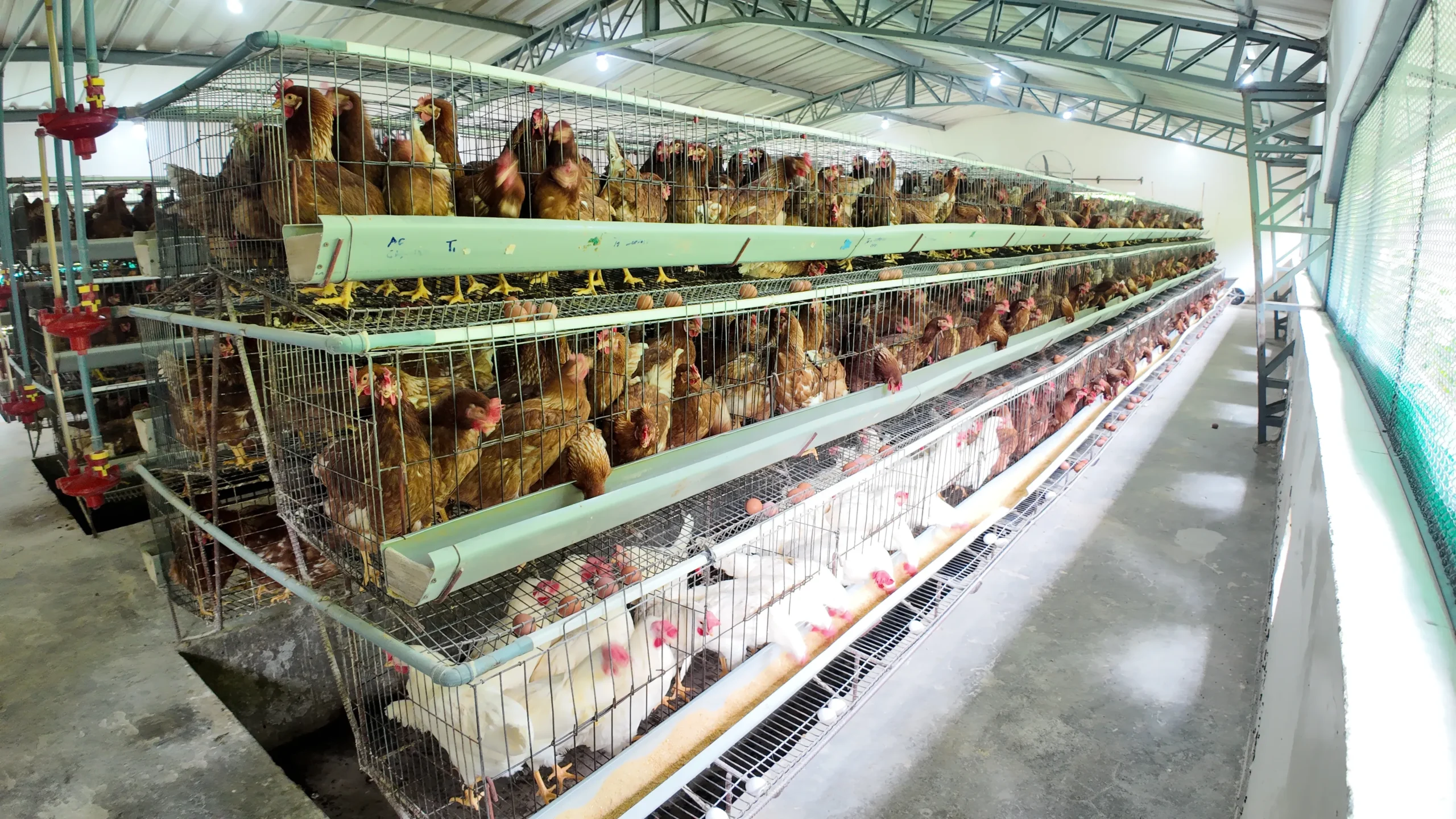
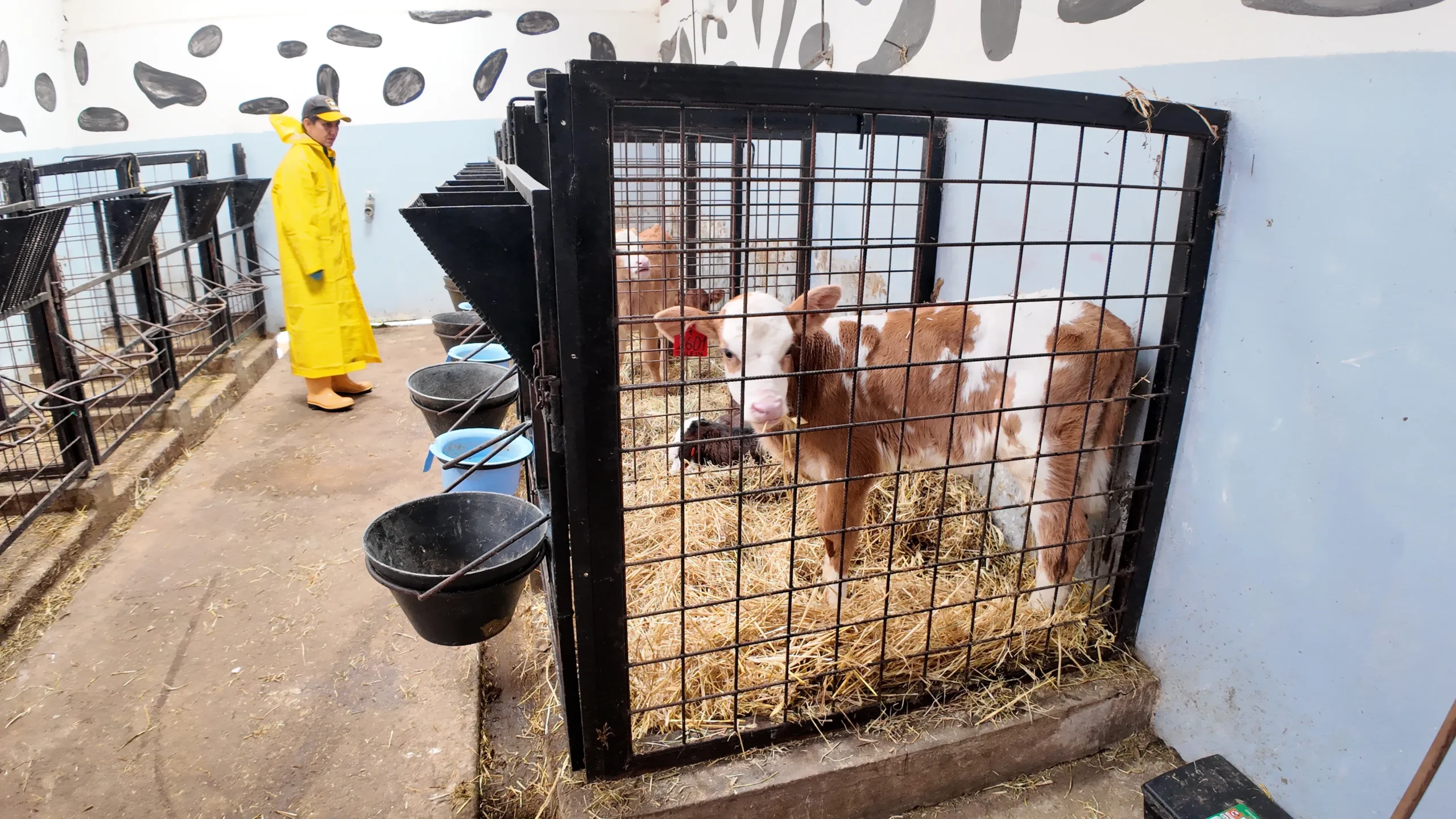
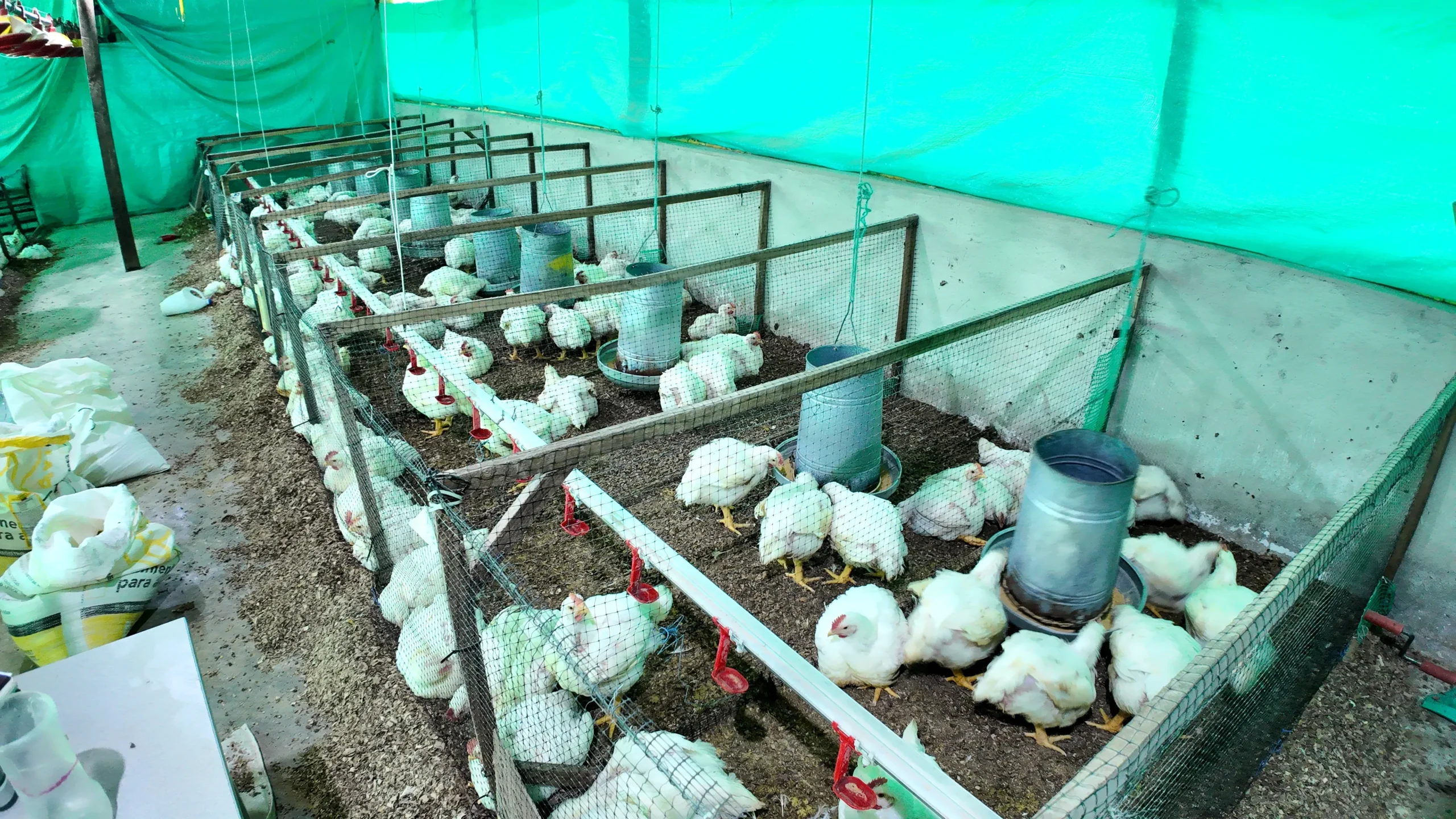
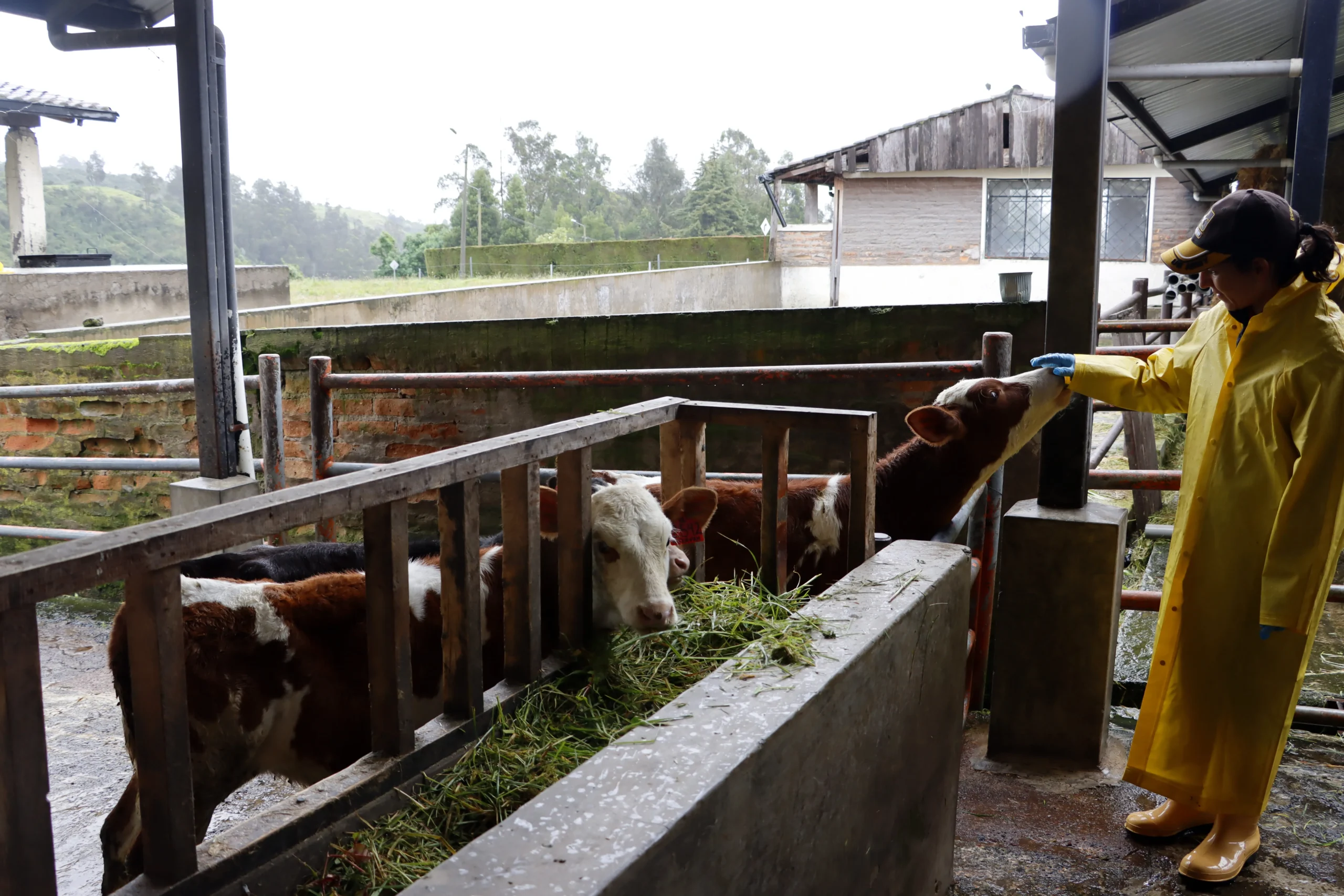
  • Manage production systems for livestock species using a sustainable approach.
  • Develop comprehensive outreach projects in the agricultural sector to promote food security and sovereignty.
  • Assess the feasibility of agro-industrial projects with an inclusive and sustainable approach.
  • Implement comprehensive crop management programs and agronomic production systems to contribute to food safety and food sovereignty.
  • Use the natural resources of the agricultural system in a sustainable manner.

The outcomes that students will achieve within the curricular organization of courses, considering the different relationships in learning aspects—knowledge, skills, and attitudes (values)—across various fields of theoretical, practical, epistemological, and research methodology training, as well as the integration of contexts, knowledge, and culture, in addition to communication and language.

  1. Integrates the theoretical, practical, and methodological foundations of the basic sciences applicable to Agricultural Engineering through the characterization of production factors within systems, with a holistic approach and a strong work ethic.
  2. Characterizes and quantifies production factors (soil, water, atmosphere) and their relationship with living organisms within a system, through in situ diagnosis with critical thinking, analytical capacity, and precision.
  3. Consciously correlates biotic and abiotic factors through the application of microbiology, biostatistics, and mathematical models, determining the prospective use of an agricultural area for the development of small-scale agricultural production units, with respect for the environment, health, food culture, and the preservation of ancestral knowledge.
  4. Applies sustainable agricultural techniques, utilizing agromatics and agronomy, interpreting the physiological processes of plants and animals, managing and optimizing water resources, and identifying and/or analyzing microorganisms and insects, to help improve the production and productivity of agricultural systems while remaining committed to protecting consumer health.
  5. Applies precise techniques and sustainable models to improve agricultural production systems and the management of monogastric species, while respecting animal welfare and consciously implementing good agricultural practices.
  6. Explore innovative alternatives, selecting the most suitable ones for implementation through critical thinking, analytical skills, and practical application, with the aim of achieving greater productivity and quality in agricultural systems.
  7. Develops and manages sustainable, integrated livestock systems through critical thinking, analytical skills, and practical application, with the aim of improving productivity and quality, while utilizing innovative and sustainable technologies to ensure food security.
  8. It creatively incorporates viable and innovative biotechnology and agro-industrial techniques to enhance productivity, marketing, quality, and value added in agricultural production systems, with a focus on collaboration in research areas.
  9. Uses tools for plant, animal, and agroindustrial genetic improvement to generate economic benefits, focusing on enhancing quality and safety to address sanitary issues with ethics and creativity.
  10. Designs and evaluates research projects and productive systems that are participatory, innovative, and sustainable in the agricultural sector, promoting Buen Vivir and ensuring national food security with equity, leadership, and entrepreneurship.

1.Integrates the theoretical, practical, and methodological foundations of the basic sciences applicable to Agricultural Engineering through the characterization of production factors within systems, with a holistic approach and a strong work ethic.

2. Characterizes and quantifies production factors (soil, water, atmosphere) and their relationship with living organisms within a system, through in situ diagnosis with critical thinking, analytical capacity, and precision.

3. Consciously correlates biotic and abiotic factors through the application of microbiology, biostatistics, and mathematical models, determining the prospective use of an agricultural area for the development of small-scale agricultural production units, with respect for the environment, health, food culture, and the preservation of ancestral knowledge.

4. Applies sustainable agricultural techniques using Agromatics and Agronics, interpreting the physiological processes of plants and animals, managing and optimizing water resources, and identifying and/or analyzing microorganisms and insects, in order to contribute to improving the production and productivity of agricultural systems, with a commitment to protecting consumer health.

5. Applies precise techniques and sustainable models to improve agricultural production systems and monogastric species, respecting animal welfare and consciously applying good agricultural practices.

6.Explore innovative alternatives, selecting the most suitable ones for implementation through critical thinking, analytical skills, and practical application, with the aim of achieving greater productivity and quality in agricultural systems.

7. Develop and manage sustainable, integrated livestock systems through critical thinking, analytical skills, and practical application, with the aim of improving productivity and quality, while utilizing innovative and sustainable technologies to ensure food security.

8. It creatively incorporates viable and innovative biotechnology and agro-industrial techniques to enhance productivity, marketing, quality, and value added in agricultural production systems, with a focus on collaboration in research areas.

9. Uses plant, animal, and agroindustrial genetic improvement tools to generate economic benefits, focusing on enhancing quality and safety to address sanitary issues with ethics and creativity.

10.

Curriculum Structure

Academic structure of the program

Current Curriculum

Gallery Gallery

Spaces, moments, and experiences that bring the program to life

Admissions and costs

Spaces, moments, and experiences that bring the program to life

CES Resolution

RPC-SO-15-No 309-2020

Program Code

ISOF-SQ-2023

Application Dates

March – April 2025 / August – September 2025

Program cost:

Article 356 of the Constitution of the Republic establishes, among other principles, that third-level public higher education shall be tuition-free, and that this gratuity is linked to the academic responsibility of students.

Begin your path in

Agricultural Engineering

Join Universidad de las Fuerzas Armadas ESPE and become part of an

academic community of excellence with international reach.

Professor Mgs. Hernán Antonio Moreano of the Department of Security and Defense, represented the University of the Armed Forces – ESPE in the international course “National Development”, held at the National Defense University (NDU), in Taipei, Taiwan 🇹🇼, from March 16 to 27, 2026.

During this academic experience, he strengthened his knowledge in development, technology and security, in addition to identifying opportunities for academic and research cooperation, contributing to the international positioning of ESPE.

Training that transcends borders and strengthens knowledge.

This academic and strategic space brought together national and international specialists with the aim of strengthening the multi-domain capabilities of the Armed Forces, through analysis, updating of knowledge and exchange of experiences in the field of air and cyber defense.

Through this forum, the development of comprehensive strategies, the use of emerging technologies and operational preparedness are promoted, contributing to a more effective response to contemporary threats and the strengthening of national security.

The event was chaired by BRIG. Nilo Estrada Caicedo, Commander of the Air Force Education and Doctrine Command, who highlighted the importance of innovation and inter-institutional cooperation to face the new challenges of the technological environment.

ESPE reaffirms its commitment to training, research and the generation of knowledge at the service of the country’s defence and development.

Civic Moment │ The conference was given by Tcrn. Francisco Salvador Santacruz, Mgtr., Director of the IASA I Administrative Support Unit, with the theme “Day of the Ecuadorian Teacher”, highlighting the value of teaching work in academic and professional training.

The day concluded with the intervention of Crnl. Mauricio González, rector of the University of the Armed Forces – ESPE, who addressed the inauguration of the SI 2026 academic period and extended a commemorative greeting for Teacher’s Day.

The Crnl. Mauricio González, rector of the University of the Armed Forces ESPE, together with his delegation, fulfilled an academic agenda in Brazil with a visit to the University of the Air Force (UNIFA) and the Army Command and General Staff School (ECEME), within the framework of the strengthening of international cooperation.

During the day, he held meetings with military authorities, Commanders General Carlos Alberto Moutinho Vaz (ECEME) and Major General Max Cintra Moreira (UNIFA), where they discussed lines of work focused on technical-scientific development, innovation and applied research. In this context, joint initiatives aimed at co-development, patent management and the sharing of high-level technological infrastructure were planned.

These actions consolidate strategic links that contribute to the advancement of knowledge, technology transfer and the strengthening of capacities in the field of defense and security.

The Crnl. Mauricio González, rector of the University of the Armed Forces ESPE, made an official visit to the Military Institute of Engineering (IME) of Brazil, where he was received by its director, Major General Military Engineer Juraci Ferreira Galdino, director. He also visited the Naval War College (EGN), being welcomed by its director, Rear Admiral Gustavo Leite Cypriano Neves.

During the meetings, spaces for dialogue aimed at scientific cooperation, research and the development of joint projects in strategic areas such as Defense and Security were strengthened. The ESPE delegation learned about the postgraduate programs, institutional capacities and toured key facilities that promote training and high-level research.

These activities reaffirm ESPE’s commitment to internationalization, academic excellence and the strengthening of strategic alliances at the regional and international levels.

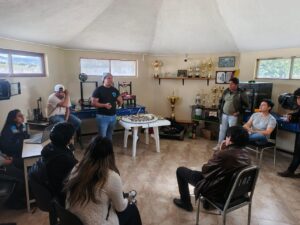
#ESPEU, through the Directorate of Management and Promotion of Energy Efficiency and Sustainable Development Projects, in conjunction with the Integrated Security Unit, held an enriching talk and discussion aimed at teachers and administrative staff of the Green University Commission. ♻️

During the day, key issues such as institutional energy efficiency, the Ecuador Zero Carbon (PECC) program, generation of sustainable projects and alignment with the indicators of the UI GreenMetric ranking were addressed.

This initiative strengthens institutional capacities and reaffirms ESPE’s commitment to sustainability, promoting concrete actions for the construction of a more environmentally responsible campus.

The Rector Crnl. Mauricio González, convened a meeting with the administrative staff of the headquarters, where he shared the axes that will mark the institutional course: sustainable strategic planning, the renewal of management staff and a short and long-term projection based on the strategic objectives of the University.

During the meeting, the importance of the following was highlighted:

✨ Promoting an innovative and relevant academic offer

✨ Strengthen organizational identity and culture

✨ Recognize the trajectory and commitment of staff with years of service

✨ Consolidate a clean, orderly and modern ESPE

✨ Modernize laboratories and prioritize quality over quantity

This space for dialogue reaffirms the institutional commitment to improve, optimize and enhance each area, to build a more efficient, sustainable university aligned with the needs of the country. 🇪🇨🎓